Wednesday, October 19, 2011

Leon Engelen


Just finished artist Leon Engelen's book "Observant Eyes." Mr. Engelen is a truly remarkable artist, and I would highly recommend his book to any artist interested in working with oil paint http://www.engelen.com/shop/book.htm . The book contains a lesson, and is mainly a compilation of close up pictures of his works. The photos are an education in themselves.

His website is packed with wonderful information http://www.engelen.com/, and his Youtube videos are quite inspirational:


Thursday, May 5, 2011

Red Cloud


Red Cloud was an American bison, who resided on a ranch in Ohio. I don't think that I have ever been so impressed with any other animal. He was huge, yet more agile than a horse. He seemed quite curious, and almost appeared to study people. Well, no almost about it, he did study people. I was quite upset to find that he is no longer living.

This is oil on hard wood panel, size 30 by 38 inches. The paint is rather impasto, except for the dark areas, and makes use of a limited palette.

Old Girl


Old girl is an old worn, durable, noble, curious, and beautiful creature. I just love these guys!


This is oil on panel, 14 by 18 inches.

Sunday, January 9, 2011

Work in Progress


This painting is 11x14, oil on canvas panel. It is coming along very slow. Been at it for quite some time, and still have so much detail work, that it feels a bit overwhelming.

Wednesday, December 22, 2010

My Favorite Artist of The Past


Although Van Gogh's paintings are in a style that is different than my way of working, I find a great deal of inspiration in them. There is also a great deal of freedom in them. Although he studied with others, he wasn't bound to the rules established by others, and made his own way. In the present world, his work receives much criticism, sometimes even from artists. However, when I go to the museum, I find that I study his works more than others.

As for his eating paint, well, I wouldn't do it, but hey, it does smell aweful good! At least if made with linseed oil, and I don't think he ate much.

The painting above is an attempt on my part to copy one of his self portraits. Probably a poor attempt, but I just respect his beliefs, and work so.

Sunday, December 5, 2010

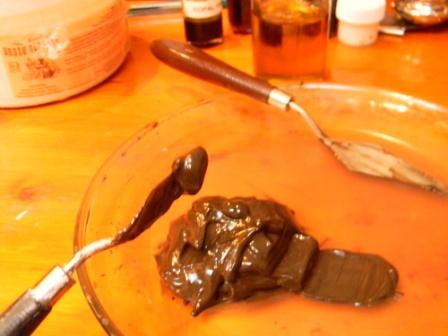
Making Paint: Sedona Earth


Oil paint is mainly pigment, and drying oil, and at times a stabilizer. I think that an oil paint with some form of stabilizer makes a better paint. The oils are poppy, safflower, walnut, and linseed. Many artists use different oils, for different reasons. I generally prefer linseed oil. It is very durable, and has been used successfully for centuries. Safflower is very good at mitigating the yellowing effects seen with linseed oil. For lack of a better explanation, I love the smell of linseed oil, and when it comes to making paint, the cold pressed version is excellent. Cold pressed linseed oil wets pigments better than alkali-refined linseed oil. When made in factories, this is no concern, but I have found it much more effective when making my own paint.

Several years ago I was on vacation in Arizona, and visited Sedona. It was red! A beautiful iron oxide red, everywhere. Immediately I thought that the sand would make a very nice color in paint, so I collected some in a plastic bag.
I took this material, and cleaned it several times to remove organic material. I then baked it to dry, and although it was already very fine in particle size, I ground it down much further, to the texture of my other dry pigments. When sufficiently ground, I added cold pressed linseed oil, and ground the pigments into the oil. Somewhat gritty at first, they did break down into even smaller particles, with a great deal of effort, and time. The thing that was most interesting is that as the particles became smaller, the color of the paint darkened. In the end, it was very dark, and didn't appear red at all. More of a burnt umber color, but with much different working properties. When mixed with white, it does have a red hue, but there is a notable shift to yellow. In mixing this color with venetian red, and titanium white, it produced a flesh tint that was so right on, with relative ease, that when I wiped the paint laden brush on my hand, the color was indistinguishable from the local skin color. When mixed with ultramarine blue deep, a wonderful black results, and I have found this black to be very close in hue, and working properties to the actual ivory black, made from actual ivory.

Considering the amount of effort and time that went into this, I don't think I will make a huge amount, but it was a good experience, in keeping with the craft. The amount that I produced after about 8 hours of work, was approximately 35ml. A similar amount to a single tube of paint, bought in the store.

The remarkable thing about this paint, is that although enmasse, it resembles burnt umber, or any number of mixes, the working properties create a much more subtle effect. It is not overwhelming in the least, nor is it gritty. I would add that as a stabilizer, I used a very small amount of amber varnish that I made earlier this year (about the size of a lima bean). It immediately congealed the paint, and made a wonderful texture. This truly is an earth color. Please excuse the pile depicted, as it does resemble another less than desireable substance.

Sunday, November 21, 2010

Don't Die For Your Art


This painting is 18x24 inches. It is on a support of burlap laid down on hard wood panel. One of my favorite subjects, this group of bison except for baby has been familiar to me for years. I got relatively close to them to complete sketches. Baby appeared quite interested, and studied me. She came quite close on several occasions, and the adults appeared to be getting more nervous as time went on. This is a large male bison, and a female baby, recently born. He appeared very gentle with this baby, and never took his eyes off of me. They finally had enough of me, and the entire group started moving toward me, and I decided to head back for the fence. They moved quicker and I felt the heels of my shoes hitting the back of my shoulders. I dove through the electric fence, and rolled. Dirty, but happy to not have a bison horn stuck in my ribs.

The colors for this painting were cadmium yellow light, yellow ocher, burnt sienna, burnt umber, red iron oxide, ultramarine blue, cobalt blue, titanium white. The medium was amber varnish, added in small amount to the paint nuts, to stiffen them, and create a more impasto effect. Since the support was burlap, with large interstices, it took a great deal of paint. There is still more work that needs to be done; mainly with the backgound tree line, and in the fur.